Why Create a Workout Corner?
A dedicated workout corner can make exercise feel more convenient and consistent. You do not need a full home gym or a large room. A small, well-planned area can support stretching, strength exercises, mobility work, and light cardio.
The main goal is to create a space that is easy to use. When your equipment is visible, organized, and ready to go, there are fewer obstacles between you and your workout. Even a corner of a bedroom, living room, basement, or home office can work well.
A good workout corner should be:
– Comfortable enough for floor exercises
– Clear of furniture and tripping hazards
– Well lit and properly ventilated
– Easy to clean
– Simple to organize
– Flexible enough for different activities
Choose the Right Location
Start by looking around your home for an area with enough open floor space. You do not need much room, but you should be able to move your arms and legs freely without hitting nearby objects.
A space of about six feet by six feet can be enough for many basic exercises. If you plan to use larger equipment, such as a stationary bike or weight bench, allow additional room around it.
Consider These Factors
Flooring: A firm, level surface is important. Carpet can provide some comfort, while wood, tile, or vinyl may need a protective exercise mat.
Lighting: Natural light can make the area feel more inviting. If the space is dim, add a floor lamp, wall light, or bright overhead bulb.
Ventilation: Choose a spot with access to fresh air if possible. A nearby window or fan can help the area feel more comfortable.
Privacy: Some people prefer a quiet corner away from the main living area. Others enjoy being near a television or speaker. Choose a location that matches your habits.
Storage: Make sure there is a place nearby for small equipment. A workout corner that becomes cluttered may be harder to use.
Start With the Basics
You do not need to buy many items at once. Begin with a few versatile pieces that support different types of exercise.
Exercise Mat
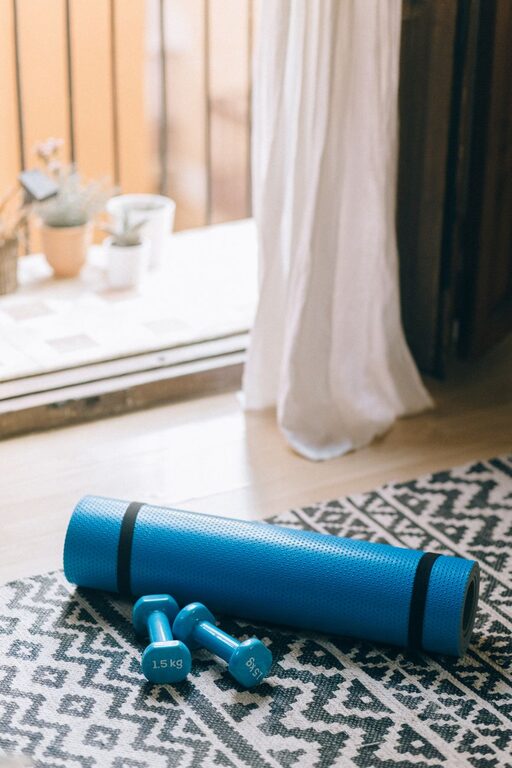
An exercise mat is one of the most useful additions to a home workout corner. It creates a cleaner, more comfortable surface for stretching, floor exercises, yoga, and bodyweight movements.
Choose a mat that is long and wide enough for your height and preferred activities. A thicker mat can provide more comfort, while a thinner mat may be easier to roll up and store.
Resistance Bands
Resistance bands take up very little space and can be used for a wide range of exercises. They are available in different resistance levels, making it easy to start light and progress gradually.
Look for a set that includes several band strengths. Some sets also include handles, ankle straps, or a door anchor. Store the bands in a small basket or fabric bag to keep them together.
Light Weights
A pair of light dumbbells can add variety to simple workouts. Adjustable dumbbells are useful when storage space is limited, but traditional pairs are often easier to use and less expensive.
Choose a weight that feels manageable for your planned exercises. You can always add heavier options later if your space and routine require them.
Stability or Exercise Ball
An exercise ball can support balance exercises, stretching, and certain strength movements. It can also serve as an alternative seat during short periods of desk work.
Because it is large and round, plan its storage before buying one. A corner stand, wall strap, or open space beside a cabinet can keep it from rolling around the room.
Add Equipment Slowly
Once you have used your basic setup for a few weeks, consider what would improve your routine. Avoid buying equipment simply because it looks appealing. Choose items that fit your goals, available space, and preferred activities.
Possible additions include:
– A jump rope for simple cardio sessions
– A foam roller for gentle self-massage and mobility work
– A step platform for low-impact exercises
– A pull-up bar designed for your door frame
– A compact stationary bike
– A kettlebell for strength and conditioning exercises
– A yoga strap or blocks for stretching
Before adding larger or heavier equipment, check the product instructions and make sure your floor and surrounding area can support safe use.
Plan Smart Storage
Good storage keeps the workout corner tidy and ready for use. The best solution depends on the size and layout of your home.
Small-Space Storage Ideas
– Use a vertical shelf for bands, towels, and small accessories.
– Place dumbbells in a sturdy basket or low storage bin.
– Hang resistance bands on wall hooks.
– Store a rolled mat behind a door or beside a cabinet.
– Use a bench with hidden storage if you need extra seating.
– Keep a small towel and water bottle in a nearby basket.
– Use labeled containers to separate strength, stretching, and cardio items.
Avoid stacking heavy equipment in unstable piles. Keep frequently used items within easy reach and store less-used items higher up or farther away.
Make the Space Inviting
A workout corner should feel like a place you want to use. Small design choices can make a noticeable difference.
Add a simple color theme, a framed print, or a small plant if the area has enough light. A wall mirror can help make a small space feel larger and allow you to check your form during certain movements.
You can also create a simple entertainment setup. A small speaker, television, or tablet stand may make workouts more enjoyable. Keep cords secured and out of the way to reduce tripping risks.
Try not to overcrowd the area with decorations. Open floor space is more valuable than extra accessories.
Create a Simple Workout Routine
A workout corner is most useful when it supports a realistic routine. Start with short sessions that fit your schedule instead of planning an ambitious program that is difficult to maintain.
A basic session might include:
- Five minutes of gentle warm-up movements
- Ten to fifteen minutes of strength or bodyweight exercises
- Five to ten minutes of light cardio or mobility work
- A few minutes of relaxed stretching
You can rotate activities throughout the week. For example, use resistance bands one day, focus on mobility the next, and include a light cardio session later in the week.
Keep a small notebook or use a phone app to record the exercises you complete. Tracking your sessions can help you notice patterns and keep your routine organized.
Keep Safety in Mind
Before each session, check that the floor is dry and the equipment is in good condition. Make sure bands have no visible damage and that weights are placed securely.
Leave enough open space around your body and equipment. Keep pets, loose cords, and small objects away from the workout area while exercising.
Use controlled movements and choose equipment that matches your current experience. If an exercise causes discomfort, stop and choose a different movement. Follow the instructions provided with any equipment, especially items that attach to doors or walls.
Maintain the Corner
A few minutes of regular maintenance can keep the space clean and useful. Wipe down frequently handled equipment, wash your mat according to its care instructions, and return everything to its storage location after each session.
Every few months, review what you actually use. Remove broken, unused, or duplicate items. Rearranging the space can also help if your routine changes.
The best workout corner is not the most expensive or impressive one. It is the space you can access easily, keep organized, and use regularly. Start small, choose versatile equipment, and build the area around the activities you enjoy.